Physical Address
304 North Cardinal St.
Dorchester Center, MA 02124
Physical Address
304 North Cardinal St.
Dorchester Center, MA 02124

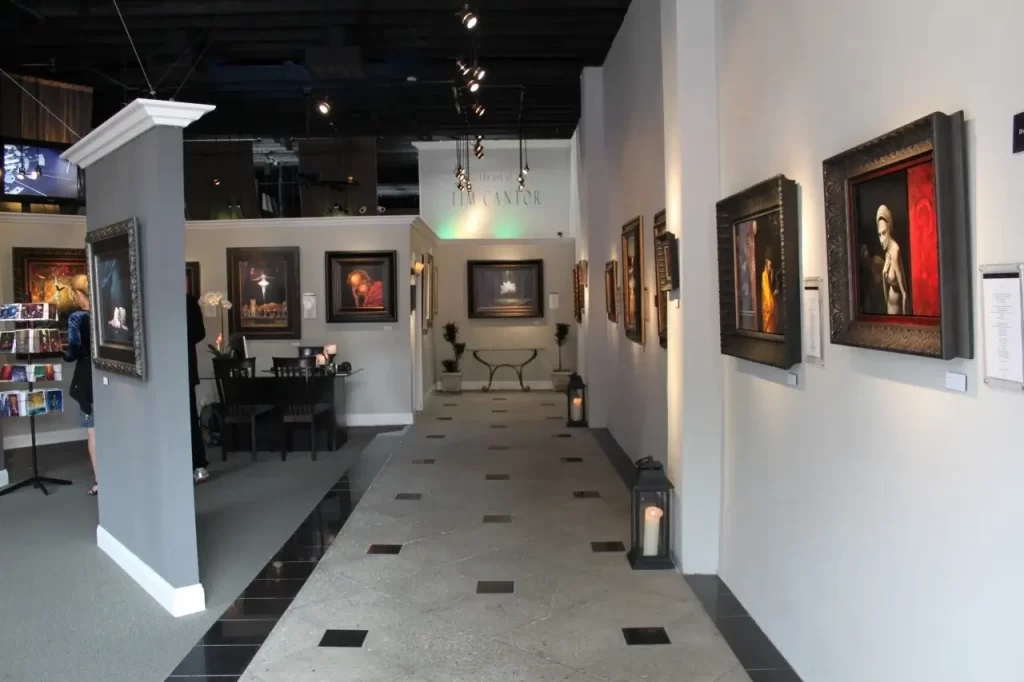
Here are San Diego’s top five Art Galleries! Experience the best in local artistry, showcasing exceptional skill, creativity, and innovation that make them stand out. Let’s explore the finest Art excellence San Diego has to offer.
1. Arts District Liberty Station
Established in 1923, Naval Training Center San Diego (NTC) – with its barracks, commissary, classrooms, command center, and parade grounds — was a landmark in San Diego for most of the 20th century. When in the base closed officially in 1997, the City of San Diego hired the Corky McMillin Companies to redevelop the property that came to be called Liberty Station. The NTC legacy, more than a century in the making, lives on in the Naval and military history of the campus, the buildings and architecture being redeveloped for contemporary usage, and in the stories of servicemembers, veterans, and their families. Honoring the past means creating a meaningful legacy for all of those who gave so much.
In 2000, the NTC Foundation was established to create a “Civic, Arts, and Cultural Center,” as part of the redevelopment effort called Liberty Station. This mission-driven nonprofit has played a unique dual role in leading the mixed-use adaptive redevelopment of 26 historical buildings entrusted to the foundation, while also bringing cultural vibrancy to the region through programming focused on commissioning public art, supporting the rising generation of creatives, and increasing access to arts engagement opportunities for youth. What began as a real estate project has grown into an organization and a campus both called Arts District Liberty Station. Looking ahead to our 25th anniversary, we’re excited to celebrate the opening of the Joan & Irwin Jacobs Performing Arts Center (“The Joan”); welcome our largest cohort of artist residencies (in visual arts and dance); and showcase the two latest “Installations at the Station” pieces in our public art series. The celebration of a quarter-century of hard work, learning, and progress is a wonderful opportunity to share a bold vision for the future we’re building here.
Our vision is to be a world-class arts district in the transborder region where creativity, culture, and community thrive. As a foundation, our purpose is fostering, facilitating, and funding the work of individuals and organizations, institutions and entrepreneurs that share our goal of making Arts District Liberty Station a regional hub in our vibrant creative economy. By providing access to work and studio spaces, offering grant funding and other opportunities, hosting convenings for learning and sharing, and enabling tenants to access capacity-building support in areas like promotions and partnership development, we’re catalyzing the vision we believe in. Anchored in our mission, the Arts District is a cultural center, a gathering place, an economic driver, and a valued partner in civic innovation and community development… the heart of Liberty Station.
Our Mission
The mission of Arts District Liberty Station is to activate a dynamic and historic campus where enriching cultural experiences, impactful learning opportunities, and inspiring events are accessible to all.
Our Vision
Our vision is to be a world-class arts district in the transborder region where creativity, culture, and community thrive.
Bravo Zulu- Celebrating 10 Years
Take a look back and see where we started with acres of shuttered Navy buildings and how they have been transformed to a vibrant and thriving hub for arts and culture. And see what’s ahead for this burgeoning destination.
Tim Cantor was born north of San Francisco in the summer of 1969.
In 1975, Tim Cantor’s father recognized his son’s extraordinary desire for drawing. Not like something taught. This was love. He went into the attic in search of a long-forgotten box of oil paints and brushes that had once belonged to Tim’s great-grandfather. With these very tools—used nearly a century earlier as his British ancestor traveled through Asia, Europe, and America—Tim began painting. His understanding of oils was immediately clear, and his lifelong passion was set in motion. By the age of five, he had completed his first oil painting; by fifteen, he held his first gallery exhibition, where one of his works was acquired for display in the White House. From that moment, his art was in demand.
Over the years, Tim’s paintings have been exhibited around the world. His art became more than his profession—it was his way of life, carved in passion. His subjects are strange, sometimes beautiful, always quiet. Holding you by their details, often weaving together portraits, animals, fabrics, trees—such trees that lean as if they are feeling. Colors that pull you in. And always, somewhere in the paint, Amy. She is in the shapes, in the shadows, in the hidden letters of her name.
He paints at night. Always. The world is quieter then. It is the only time that belongs to him. He paints in silence, and the silence becomes part of the work. That noiseless focus has shaped not only his paintings but also his unique way of poetic writings. The words are personal and filled with meaning, explaining the paintings, but not completely.
In 2015, Tim Cantor formed a close creative bond with the Grammy-winning band Imagine Dragons, a friendship that continues to this day. He designed the cover for their second album, Smoke + Mirrors, along with thirteen paintings, each representing a song from the LP. His art became part of their stage designs and the SHOTS music video, while a touring gallery of his work accompanied the band to over sixty shows across North America and Asia. Smoke + Mirrors went on to reach number one on the Billboard 200, introducing Tim’s art to an even wider audience. He continues to work with Imagine Dragons on unique and unexpected projects, keeping their artistic connection alive. They understand each other.
Tim’s work is difficult to define. Though he is considered a modern artist, but his hands move like painters from centuries ago. Dutch masters. Renaissance artists. French classicists. He does not fit neatly into any category. His paintings often appear in unusual places, including film, television, and digital worlds—an especially rare feat for an artist who paints solely by hand, mixing his colors, grinding his paints and applying them strictly to classical precision.
Tim and Amy Cantor have expanded their artistic reach by opening a gallery in Amsterdam, another home to match the one in America. They now spend most of the year in Amsterdam, where Tim continues his nightly painting rituals.
His art has found its way into the lives of collectors and admirers from all over the world. Considering he made his first authentic oil painting at five years old. If he lives as long as most men, he may have one of the longest artistic careers in history. Tim Cantor is, in many ways, a mystery—his work is unpredictable, his process deeply personal. While the future of his art remains open-ended, one thing is certain: the act of painting, lost in the world he creates. That is what he does. That is what he will always do.
3. Mingei
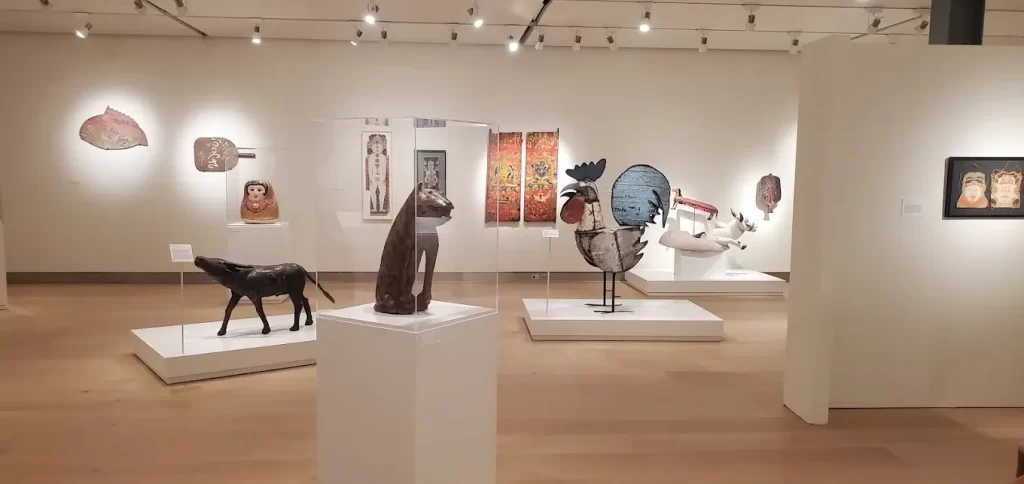
Mingei was founded in 1978 and presents works of folk art, craft, and design. The Museum has a rich history and commitment to furthering the understanding of art of the people (mingei) from all eras and cultures. Objects in our Collection reflect a joy in making, by hand, useful objects of timeless beauty that are satisfying to the human spirit.
Established in 1978, Mingei International Museum collects, conserves, and exhibits arts of daily use – by anonymous craftsmen of ancient times, from traditional cultures of past and present and by historical and contemporary designers.
The Museum’s Founder, Martha Longenecker, was a professor of art at San Diego State University who studied the art of pottery-making in Japan. As an artist-craftsman, she became acquainted with and learned from the founders and leaders of the Mingei Association of Japan, who inspired her to carry the vision of mingei to the U.S.A.
Inaugural Exhibition
Mingei’s inaugural exhibition was DOLLS AND FOLK TOYS OF THE WORLD. Since then, Mingei has shared over 183 exhibitions covering a diverse range of cultures, themes, and media. These exhibitions have featured both unknown craftspeople and renowned artists, and everything from the tiniest pre-Columbian bead to large-scale sculptures by Niki de Saint Phalle. In August 1996, Mingei International Museum relocated to a 41,000-square-foot facility on the Plaza de Panama in Balboa Park.
The Meaning of “Mingei”
The word mingei, meaning art of the people, was coined by a revered Japanese philosopher named Sōetsu Yanagi. As a young man living in Korea in the early 1920s, he was taken with the timeless beauty of Yi dynasty (1392-1910) pottery—a simple, rustic type made in numberless quantities over the centuries. Used for everything from tea cups to kimchi jars, the pottery was everywhere and taken for granted.
Yanagi, however, saw Yi dynasty pottery with fresh eyes, and he considered it among the most beautiful of manmade objects—equal to renowned scroll paintings of the East and paintings and sculptures of the West. His writings, lectures, and conversations opened the eyes of Koreans to their long-dismissed and anonymous artistic legacy. In 1921, Yanagi opened a folk museum in a small building in the old palace in Seoul, filled with Korean pots and other crafts. It was the first museum of mingei in the world.
Returning to his homeland, Yanagi began to collect Japanese crafts, believing that his own people, too, needed to discover and preserve anonymous objects of truth and beauty that they had lived with and used over the ages. In 1936, with potters Kanjiro Kawai and Shoji Hamada, he opened the first Japan Folk Craft Museum (Nihon Mingei-kan). It stands for arts of the people returned to the people. Yanagi explains the concept of mingei in his seminal work, The Unknown Craftsman:
“It is my belief that while the high level of culture of any country can be found in its fine arts, it is also vital that we should be able to examine and enjoy the proofs of the culture of the great mass of the people, which we call folk art. The former are made by a few for the few, but the latter, made by the many for many, are a truer test. The quality of the life of the people of that country as a whole can best be judged by the folkcrafts.”
Our Mission
Mingei International Museum is dedicated to furthering the understanding of art of the people (mingei) from all eras and cultures of the world. This art shares a direct simplicity and reflects joy in making, by hand, useful objects of timeless beauty that are satisfying to the human spirit. The Museum collects, conserves, and exhibits these arts of daily life – by unknown craftspeople of ancient times, from traditional cultures of past and present and by historical and contemporary designers.
Our Vision
We envision a world where people find joy, beauty, and inspiration in our shared human creativity.
Our Values
The core values of the Museum are the basis of our institutional culture by which we set the Museum’s direction and carry out its operations. These values guide the decisions and actions of the trustees, director, and staff in relationship to one another and the public.
Excellence
We strive continually to learn, improve and incorporate the best practices of the museum field into our work.
Creativity
We present the highest expressions of creativity from all cultures, to inspire our audiences to realize their own innate creativity. We celebrate the contributions of unknown individuals; find the extraordinary in the ordinary; and value humble objects and the imperfection of the handmade.
Collaboration
We foster engagement and dialogue with the Museum’s internal and external communities, developing partnerships with individuals, other museums and community organizations.
Accessibility
We provide a welcoming, hospitable, and stimulating atmosphere for staff, volunteers, and visitors.
Transparency
We believe in sharing critical data and information about the Museum with our staff, volunteers, and audiences and in working to maintain an open dialogue with our public.
Integrity
We expect dependability, accuracy, responsibility, flexibility, and respect of one another in the delivery of the Museum’s mission to all its stakeholders.
Mingei aims to inspire people to celebrate human creativity, as well as recognize, embrace, and cultivate their own creativity, in ways big or small through an inviting, fresh, sometimes surprising and always engaging look at a diverse range of thoughtfully designed, carefully crafted and passionately made objects from around the world, often created by unknown artists and craftspeople for everyday use.
4. The Museum of Photographic Arts (MOPA)
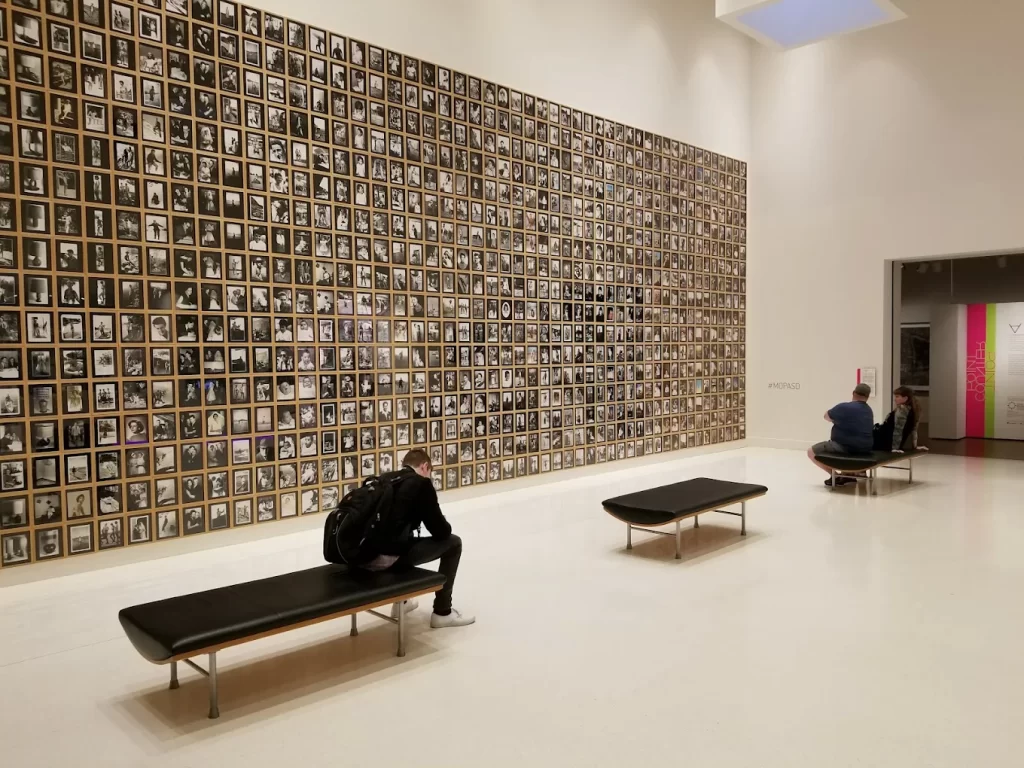
The Museum of Photographic Arts (MOPA) is a vibrant center for visual learning, dedicated to sharing and exploring the universal language of photography. With the mission to inspire, educate, and engage the broadest possible audience through the presentation, collection, and preservation of photography, film, and video, MOPA serves over 100,000 visitors annually.
Born of a group of local photographers and art patrons, plans for an actual organization began in 1972 with the creation of the Center for Photographic Arts. This entity essentially operated as a museum without walls for nine years, until the City of San Diego donated a space for a permanent location in the historic Balboa Park Cultural Complex. Accredited by the American Alliance of Museums, MOPA officially opened to the public in May 1983 and through the decades has gained an impressive international reputation for high-quality exhibitions and programs.
MOPA is one of only three independent stand-alone museums exclusively dedicated to photography and film in the nation, with its permanent collection encompassing the entire history of photography spanning contemporary works and photojournalism, in addition to materials and documents related to the history and processes of the medium. It holds more than 9,000 photographs and historical objects by 850 artists as well as over 22,000 items held within the Edmund L. and Nancy K. Dubois Library.
The mission of the Museum of Photographic Arts in San Diego is to inspire, educate and engage the broadest possible audience through the presentation, collection, and preservation of photography, film and video.
MOPA is one of only three museums in the nation dedicated solely to lens-based medium. Located in historic Balboa Park in the heart of San Diego, we offer an annual calendar of relevant, thought-provoking and engaging exhibitions, film festivals and lifespan-learning opportunities.
MOPA’s VALUES
Audience and Communities-Minded
We seek like-minded collaborative partners with mutual added value.
We work to anticipate the needs of our audience.
We are mindful, respectful and welcoming of all constituents.
Forward Thinking
We embrace change.
We are eager to excel in the changing museum landscape.
We strive to lead in the cultural arts environment.
5. The San Diego Museum of Art
Jeff Motch and Clea Hantman
Clea Hantman has written eleven books for major publishers. Before that she owned her own successful retail business in downtown San Diego for five years. She’s written for every major publication in San Diego and her work has appeared in dozens of national magazines.
Clea has also been certified by the VPN America, the local branch of the Associazione Vera Pizza Napoletana, an international non-profit organization founded in the mid 1990’s by a group of Neapolitan pizzaiolis (pizza makers). At Blind Lady Ale House we don’t follow all the rules laid out by the VPN, but instead use them as a guideline to base our own pizza philosophy on—we specialize in a combination of old world techniques and local sourcing to create a tasty and thoughtful product. Clea is the backbone of this company running payroll, accounts receivable/payable, special event catering, and more.
Jeff Motch has a degree in Art from SDSU and his work has graced the covers of bands such as Jack Johnson, blink-182, G. Love and many local bands, he has designed for the San Diego Padres, Patagonia, several local restaurants as well as created fine art posters. He ran the local music zine 360, was art director for Cargo Music/Headhunter Records, spent time in Italy working for Acerbis Italia, Designed for the Padres, and co-owned his design firm, Lively and Motch, for five years with Dave Lively of Fall Brewing Company.
Clea & Jeff also own and run Blind Lady Ale House in Normal Heights and the defunct Tiger!Tiger!Tavern in North Park.