
Natural coffee processing is one of the oldest and most influential methods of preparing coffee after harvest. By leaving the entire coffee cherry intact during drying, this method allows the fruit’s sugars and moisture to interact with the bean, producing distinctive flavor profiles. However, because the fruit remains on the bean throughout drying, the natural process requires careful management to prevent defects and ensure consistent quality.
What Is Natural Coffee Processing?
The natural process is the method in which all of the coffee cherry’s skin remains on the seed throughout the drying stage. Since the skin, moisture, and sugars remain intact, they are exposed to microbial activity during processing. For this reason, the natural process demands excellent drying facilities and careful attention from beginning to end.
Among all coffee processing methods, the natural process requires the greatest level of monitoring to produce high-quality coffee.
Step 1: Float the Coffee Cherries
Floating the cherries is always the first step in every coffee processing technique. This process serves several important purposes:
- Cleans the surface of the coffee cherries.
- Reduces the temperature of the harvested cherries.
- Minimizes microbial activity.
- Separates cherries damaged by pests.
- Removes underdeveloped cherries that are not suitable for processing.
After floating, only the healthiest and best-quality cherries should move on to the drying stage.
Step 2: Begin Drying at the Right Time
Once the cherries have been floated, they should ideally be taken to the drying area around 1:00 p.m., when sunlight is at its strongest. Starting the drying process during peak sunlight helps:
- Remove surface moisture quickly.
- Reduce fungal and bacterial growth.
- Prevent off-flavors from developing during the early stages of drying.
This initial drying period plays a significant role in determining the final quality of the coffee.
Step 3: Maintain Consistent Drying Conditions
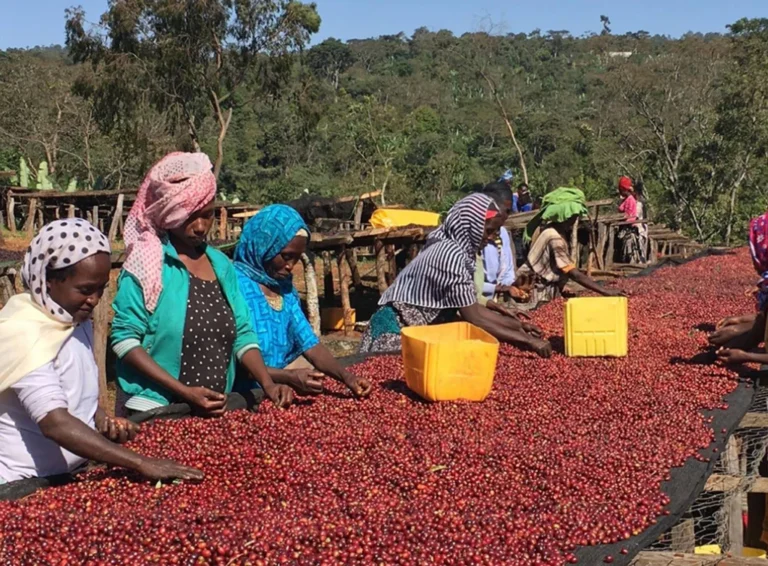
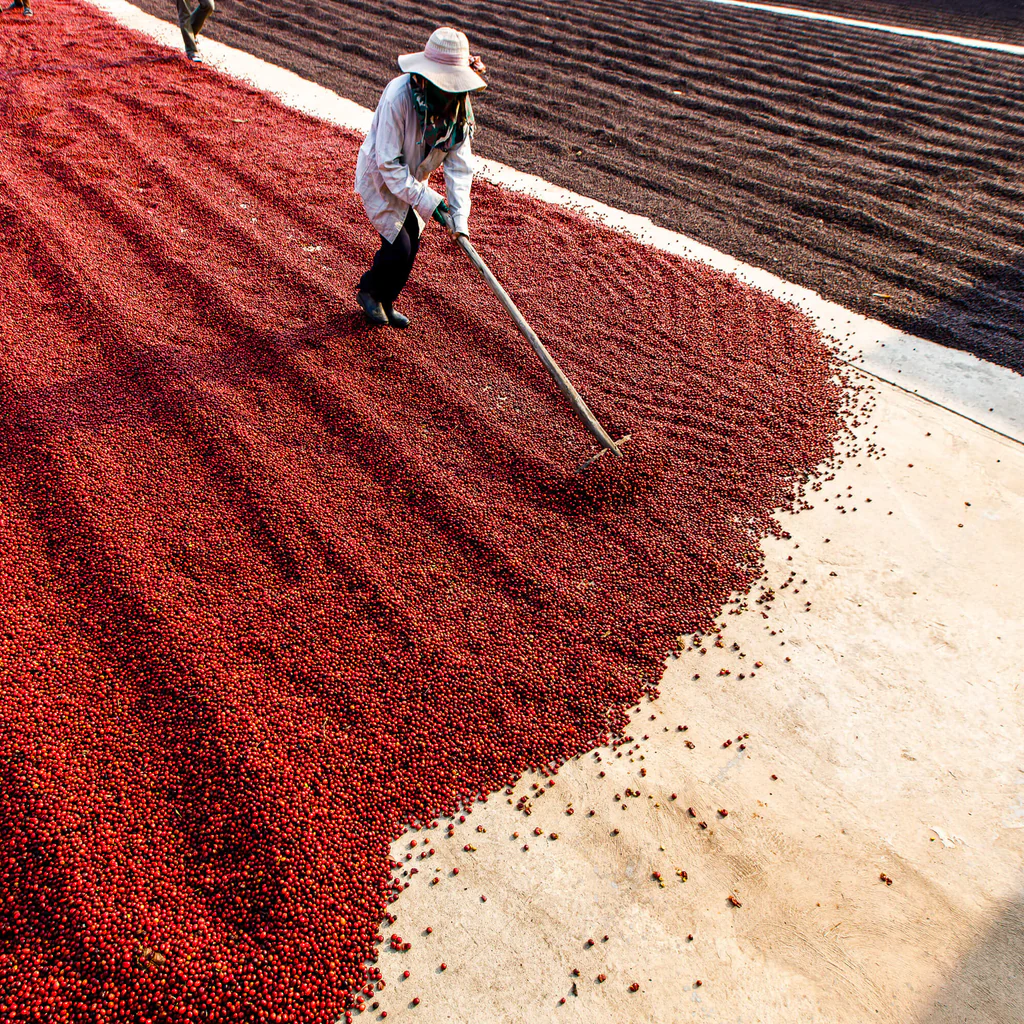
Consistency is critical throughout the natural coffee drying process. The drying surface should be flat so the cherries dry evenly. During the early stages, the coffee should be turned three to five times each day. Frequent turning helps:
- Prevent microbial activity on the cherry surface.
- Promote even drying.
- Reduce the risk of over-fermentation.
- Improve overall coffee quality.
Proper drying management is one of the most important factors in successful natural coffee processing.
Step 4: Control the Coffee Layer Thickness
As drying progresses, the coffee should be spread at approximately 12 kilograms per square meter. Maintaining this distribution allows the coffee seeds to dry evenly and consistently throughout the process, reducing moisture variations that can negatively affect quality.
How Long Does Natural Coffee Processing Take?
Depending on the producing region and climate, naturally processed coffee typically requires 15 to 20 days to dry completely. Once the coffee reaches the proper moisture level, it can proceed to dry milling, where the dried outer layers are removed to expose the green coffee bean.
Flavor Characteristics of Natural Process Coffee
Natural processing often produces coffees with:
- More intense flavors
- Strong fruit-forward characteristics
- Greater sweetness
- Richer body
These distinctive flavor profiles make naturally processed coffees highly desirable in many specialty coffee markets.
The Changing Perception of Natural Coffees
In some parts of the world, natural coffees have traditionally been associated with poor quality because improper drying often led to defects and undesirable flavors.
As coffee production evolved into a more sophisticated business, many producers began removing the skin before drying to reduce these risks.
Today, however, well-managed natural processing has proven its value. Some naturally processed coffees consistently achieve among the highest quality scores and command premium prices in specialty coffee markets around the world.
The Key to Successful Natural Coffee Processing
When producing natural coffees, careful process control is essential. Producers must ensure that the coffee:
- Does not over-ferment.
- Dries evenly throughout the entire process.
- Receives consistent monitoring from harvest until drying is complete.
When these factors are properly managed, natural coffee processing can produce exceptional coffees with outstanding flavor, high quality, and strong market value.