
The coffee dry milling process is one of the most important stages in coffee production, transforming dried parchment coffee into high-quality green coffee that meets international export standards. While much of the hard work takes place on the farm during cultivation and harvesting, the dry milling process ensures that coffee beans are cleaned, sorted, graded, and prepared for buyers around the world.
In this guide, we’ll walk through each stage of the coffee dry milling process, from weighing parchment coffee to packaging the finished green beans for export.
What Is the Coffee Dry Milling Process?
The coffee dry milling process begins by weighing the parchment coffee that is ready for processing. Once weighed, the coffee is transported via elevators that feed directly into the hopper of the dry milling machine.
The dry milling machine is the primary piece of equipment used during this stage. Its function is to mechanically force the coffee beans against one another while creating a narrow space that removes the protective parchment layer surrounding each bean. This controlled pressure allows the parchment to be removed efficiently without damaging the coffee itself.
After the parchment has been removed, the beans move on to the next stage of processing.
Screening the Coffee by Bean Size
Following the removal of the parchment, the coffee passes through a screening system designed to classify the beans according to size. Industry standards typically measure coffee bean size in 64ths of an inch. During this process, screening equipment sorts beans using screens ranging from size 13 to size 18 (64ths of an inch).
By separating beans into uniform size categories, processors create more homogeneous lots, improving consistency in roasting and ensuring the coffee meets buyer specifications.Uniform bean sizing is an important quality parameter in the coffee industry and contributes to a more consistent final product.
Density Separation for Better Quality
After size grading, the coffee is transferred to a densimetric table, where beans are separated according to their density. This equipment distinguishes the denser beans from those that are lighter or less dense.
Density is often associated with bean quality. By separating the heavier beans from the lighter ones, processors establish the first level of quality classification while beginning to remove lower-grade coffee from the lot.
This step plays an important role in improving the overall quality of the finished green coffee.
Optical Sorting to Remove Visual Defects
The next stage in the coffee dry milling process involves an optical sorter. This machine uses advanced visual detection technology to identify beans with visible defects. Once defective beans are detected, small bursts of compressed air automatically remove them from the production line.
Optical sorting significantly improves efficiency by eliminating many visual imperfections before the coffee reaches the final inspection stage.
Manual Sorting for Final Quality Control
Although automated equipment removes many defective beans, human inspection remains an essential part of coffee processing. After optical sorting, the beans move to a manual sorting table, where trained workers carefully inspect the coffee.
At this stage, any beans that do not meet the required quality standards are manually removed. This additional inspection ensures only coffee that meets customer specifications proceeds to the final stages of processing. Manual sorting serves as the final quality control step before grading and packaging.
Why Clean Equipment Matters
Throughout the **coffee dry milling process**, maintaining clean equipment is essential. All machinery should be thoroughly cleaned and dedicated exclusively to coffee processing. Using equipment for other products may introduce contamination, affect coffee quality, or compromise food safety standards.
Proper sanitation also helps preserve the aroma, flavor, and overall integrity of the coffee beans.
How Long Does the Coffee Dry Milling Process Take?
The complete coffee dry milling process typically takes between one and four hours, depending on several factors, including:
– The type of milling equipment being used
– The size and capacity of the processing facility
– The amount of coffee being processed
– The level of sorting required
Processing facilities around the world vary considerably in size and capacity. Larger operations often process coffee more efficiently, while smaller mills may require additional time to achieve the desired level of quality.
Sorting capacity is especially important because different customers require different quality specifications. A well-designed sorting process enables processors to accurately identify and separate Category One and Category Two defects according to industry standards.
Quality Evaluation Using SCA Green Coffee Standards
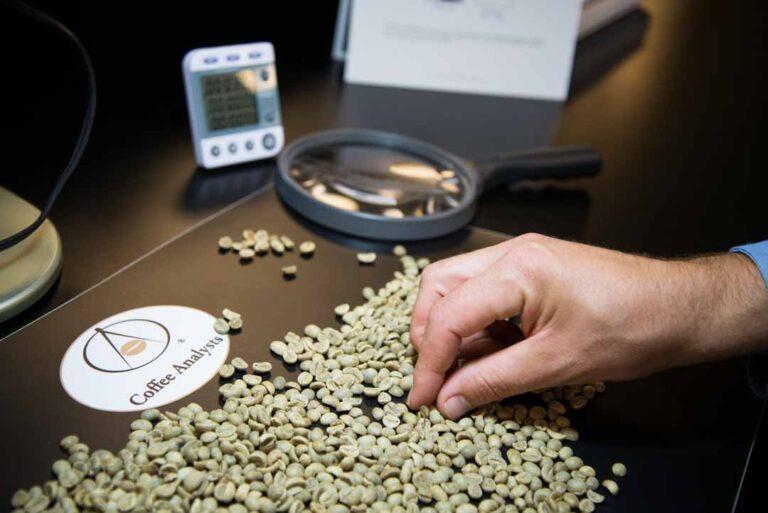
Once the coffee has completed every stage of dry milling, it undergoes a comprehensive quality evaluation based on the Specialty Coffee Association (SCA) Green Coffee Standards. A 350-gram sample is examined to determine the number of Category One and Category Two defects present in the coffee. During the inspection, evaluators also assess:
– Bean color
– Aroma
– Overall appearance
– Compliance with quality requirements
This evaluation confirms whether the coffee is ready for export and meets the specifications required by customers.
Packaging Coffee for Export
After passing quality inspection, the coffee is prepared for export. The green coffee is packed into Ecotact or GrainPro bags, which provide an additional protective barrier against moisture and contamination. These protective liners are then placed inside traditional **sisal** or **jute** bags for transportation and storage.
Once the bags have been properly filled and sealed, they are stacked and prepared for loading. At this stage, the coffee is fully processed and ready for shipment to customers around the world.
Final Thoughts
The coffee dry milling process is a critical step in producing export-quality green coffee. From removing the parchment and grading beans by size to density separation, optical sorting, manual inspection, and final packaging, every stage contributes to delivering a consistent, high-quality product.
Maintaining clean equipment, following industry grading standards, and performing thorough quality inspections help ensure the coffee meets international buyer expectations. By the time the coffee is packaged in protective export bags and stacked for shipment, it has undergone a carefully controlled process designed to preserve quality from the mill to the customer’s roastery.