
How fresh corn is processed is something many people have never had the opportunity to see. Have you ever wondered how freshly harvested corn from local farms becomes the frozen cobs and kernels you find in grocery stores?
To answer that question, we visited Quincy Foods, where Chris Scott gave us an exclusive behind-the-scenes tour of the complete journey—from freshly harvested corn in the field to frozen packages shipped around the world. Watching how fresh corn is processed using modern equipment, strict quality control, and sustainable practices was both fascinating and educational.
From the Field to the Factory
Everything begins in the cornfields.
Once the corn reaches its ideal harvest time, it is picked fresh and transported to Quincy Foods by truckloads. Timing is essential because harvesting corn at peak maturity helps preserve its natural sweetness, nutritional value, and overall quality.
As soon as the trucks arrive, the corn begins its journey through the processing facility.
Step 1: Removing the Husks
The first stop is a machine designed to remove the corn husks.
For anyone who has ever husked corn by hand at home, the speed of this machine is remarkable.
“All that hard work you guys do at home gets done in a few seconds.”
Instead of becoming waste, the leftover husks are recycled.
Chris explained that they are sold back to local farmers and used as high-quality silage for feeding cows and pigs.
“It’s actually really high-quality silage. It’s in good demand.”
Sustainability is a major part of the operation.
According to Chris, even the water used throughout the processing system is managed through a dedicated treatment system to support environmentally responsible production.
Step 2: Quality Inspection
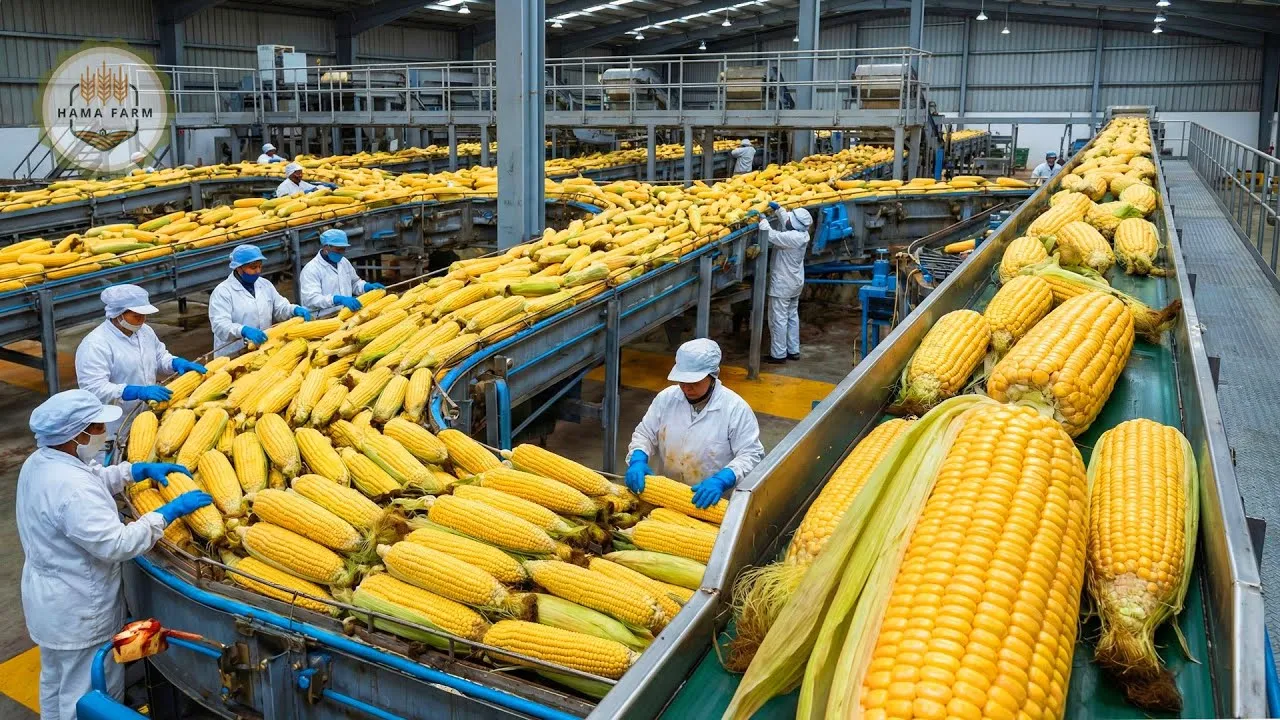
After husking, the corn travels along a conveyor belt where trained employees carefully inspect every cob.
Chris explained the process:
“Our wonderful employees are looking at each cob to find the perfect one.”
Only the highest-quality cobs continue on to become individually packaged frozen corn on the cob.
Any cob that doesn’t meet those standards isn’t wasted. Instead, it continues down the production line, where it will be processed into frozen corn kernels.
As Chris put it:
“It’s a natural product. We’re not making nuts and bolts. We’ve got to work with what we have.”
Step 3: Cutting the Corn
The next stage depends on the final product.
Different cutting machines are used depending on whether the corn will be sold as whole cobs or loose kernels.
One of the machines removes nearly every kernel from the cob in just seconds.
Watching it work is impressive.
“So when it comes out, you see a majority of those kernels are all gone.”
Seeing thousands of kernels moving through the system gives you an appreciation for just how much corn is processed every day.
Why Locally Harvested Corn Tastes Better
Chris also explained why locally processed corn often delivers better flavor and nutrition than products shipped long distances.
When produce has to travel from overseas or distant regions, it often has to be harvested before reaching full maturity so it can survive transportation.
Quincy Foods takes a different approach.
“We grow it to its maximum potential and harvest it as close to that as we possibly can.”
Because the corn is harvested at peak ripeness and frozen almost immediately afterward, it retains:
- Higher natural sugar content
- Better flavor
- More nutrients
- Greater freshness
This rapid processing is one of the biggest reasons frozen vegetables can be surprisingly nutritious.
Step 4: Blanching the Corn
After being rinsed, both the whole cobs and loose kernels move into the blanching process.
Chris pointed to a large chamber where the corn is briefly cooked.
“That’s what’s happening here.”
The corn is heated to approximately 195°F before being cooled down as quickly as possible.
Rapid cooling is important because it prepares the corn for freezing while helping preserve its texture, color, and freshness.
The Best Time to Taste Fresh Corn
During the tour, Chris offered me a freshly blanched ear of corn.
Of course, my answer was yes.
This was the same corn that had been harvested from the field, processed through the cutting equipment, cooked, and was now ready for freezing.
My reaction was immediate.
“Oh man… yeah.”
Chris smiled and said:
“This is the best time to eat corn.”
It was incredibly fresh, sweet, and delicious.
Step 5: High-Tech Quality Control
One of the most impressive parts of the tour was seeing the advanced sorting technology used for corn kernels.
Every individual kernel passes underneath a camera that carefully inspects it.
Chris explained how the system works.
If the camera detects any unwanted material—such as pieces of cob or other plant matter—the machine instantly identifies it and removes it using a burst of air.
“Everything that comes in is just the corn kernel—nothing else.”
This automated inspection helps ensure customers receive only high-quality corn in every package.
Step 6: Freezing the Corn
After inspection, the corn enters one of the facility’s largest freezers.
The temperature inside ranges from -5°F to -10°F.
At these temperatures, the corn freezes rapidly.
Quick freezing helps lock in:
- Freshness
- Natural sweetness
- Nutritional value
- Texture
- Color
Rather than losing quality over time, the corn is preserved almost exactly as it was shortly after harvest.
Step 7: Packaging for Customers Around the World
Once frozen, the corn moves to the packaging line.
Here it is packed into a variety of package sizes depending on customer needs.
Chris showed one example.
“It gets packaged in these individual one-kilogram packages and goes to Japan.”
It was fascinating to see locally grown corn being prepared for international markets.
In addition to export products, Quincy Foods also packages corn for numerous other customers using a wide range of packaging formats.
As Chris summed it up:
“We do a whole slew of different packages here.”
From Local Farms to Global Tables
One of the biggest takeaways from this tour was realizing just how much work happens after corn leaves the field.
Within a remarkably short period of time, freshly harvested corn is:
- Delivered by truck
- Husked
- Inspected
- Cut
- Blanched
- Quality checked
- Frozen
- Packaged
- Shipped around the world
Every step is carefully designed to preserve freshness while reducing waste through sustainable practices like recycling husks into livestock feed.
The next time you open a bag of frozen corn or enjoy corn on the cob from your grocery store, you’ll know exactly how it made the journey from the farm to your table.
Conclusion
Visiting Quincy Foods offered an eye-opening look at the science, technology, and people behind frozen corn production.
From sustainable recycling efforts and advanced inspection systems to rapid freezing techniques that preserve freshness, every stage of the process demonstrates how modern food manufacturing combines efficiency with quality.
It’s an impressive reminder that behind every package of frozen corn is a carefully coordinated process that starts with local farmers and ends on dinner tables across the globe.
Frequently Asked Questions
Why is corn frozen immediately after harvest?
Freezing shortly after harvest helps preserve the corn’s natural sweetness, nutrients, texture, and freshness.
What happens to the corn husks?
Rather than being discarded, the husks are recycled and sold to farmers as high-quality silage for livestock.
Why are only some corn cobs packaged whole?
Workers inspect every cob. Only those meeting strict quality standards are packaged as whole corn on the cob. The remaining cobs are processed into frozen kernels.
How cold are commercial corn freezers?
At Quincy Foods, the freezing system operates between -5°F and -10°F, allowing the corn to freeze rapidly while maintaining quality.
Does frozen corn lose nutrients?
Because it is harvested at peak maturity and frozen almost immediately, frozen corn retains much of its nutritional value.
Sections That May Need Manual Review
- The transcript does not specify the exact type of corn (sweet corn or field corn). The article avoids making that assumption, but if known, it could be added.
- The company name “Quincy Foods” is retained exactly as spoken in the transcript.
- The water sustainability statement is somewhat brief in the transcript. If publishing on the company’s behalf, additional details could be added for clarity.