

When it comes to securing a sustainable pantry, looking to history reveals some of the most reliable food preservation methods ever created. In a world where refrigeration is the norm, the Amish community thrives without the hum of modern appliances. They’ve mastered the art of keeping food fresh using time-tested food preservation methods passed down through generations. From bustling kitchens filled with laughter to quiet pantries lined with carefully stored treasures, the Amish show us that creativity and tradition can go hand in hand.
Storing food without a refrigerator might seem like something only survivalists or reality TV contestants do. But for the Amish, it’s just everyday life. Here are the secrets behind how they keep their pantries stocked and their food fresh, completely off the grid.
1. Good Old-Fashioned Water Bath Canning
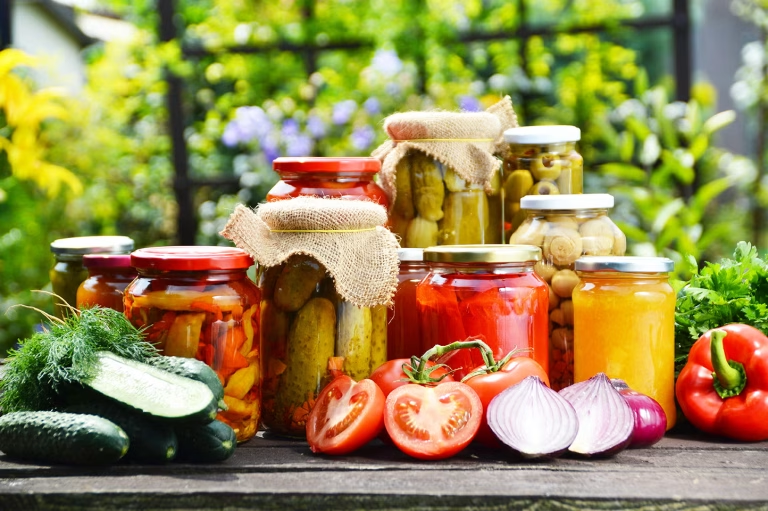
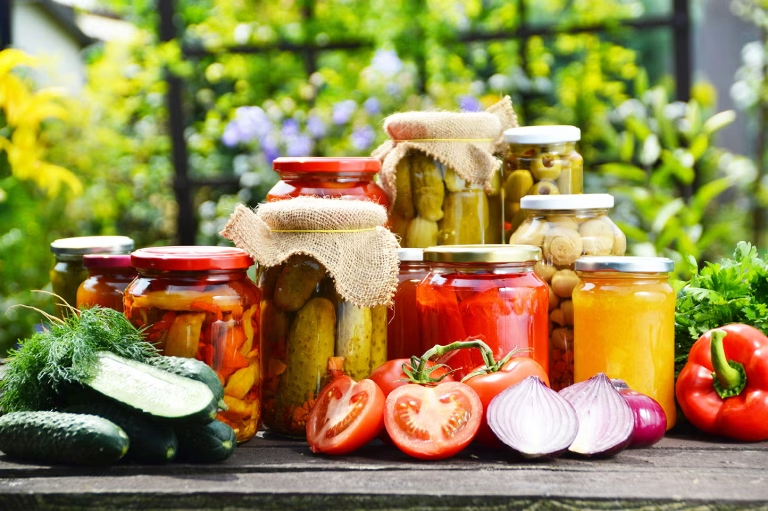
If you’ve ever seen shelves packed with jars of pickles, peaches, or tomatoes, you’ve witnessed the magic of water bath canning in action. At first glance, it looks simple: just stick food in a jar, boil it, and call it a day.
But let me tell you, this is no beginner’s kitchen project. When I tried canning peaches at home, I ended up with a sticky mess, jars that refused to seal, and the sudden realization that I might not survive the apocalypse.
The Amish, on the other hand, have this down to a science:
-
They carefully wash and prepare every jar.
-
They fill each one with fruits, veggies, or sauces.
-
They lower them into bubbling pots of boiling water like they’re sending them off on a deep-sea mission.
The heat kills off any bacteria or mold spores that could ruin the food. Once the jars are sealed, they can sit on a shelf for years without a worry. It’s like time travel for food—what you eat in 2034 could be the tomatoes you picked this summer. The record for some canned goods is over five years of freshness, as long as that seal holds tight.
Honestly, I think the toughest part isn’t the boiling or even the timing; it’s resisting the urge to pop the jars open early and dig in. When I asked my grandma about canning, she gave me a look like, “What do you mean you don’t know how?” Apparently, not knowing the difference between a hot pack and a raw pack makes you some kind of amateur in her eyes.
The Amish treat this skill like an art form, and those jars become their secret stash for when crops run low or the weather turns nasty. Winter storms don’t mean panic trips to the grocery store for them; they just grab a jar of home-canned potatoes and get cooking.
Unlike frozen vegetables, which can turn into sad, mushy versions of themselves after a few months, canned goods stay flavorful. There’s something nostalgic about the way Amish pickles snap between your teeth, or how a canned peach tastes like a little bite of sunshine in the dead of winter. And it’s all made possible without a single fridge in sight.
The Realities of Canning
Nothing is ever entirely foolproof. If you’ve ever tried to pry open a stubborn jar lid, you know what I mean. Last year, I canned some salsa and sealed it so tightly that I needed two pairs of hands and a jar opener to crack it open. My neighbor said I should market it as “tamperproof salsa” and charge extra.
That’s the thing with water bath canning: it’s as much an exercise in patience as it is a preservation method. You have to get the timing just right or the jars won’t seal properly. And if you think screwing on the lid tighter will help, well, good luck with that. At least the Amish don’t have to deal with picky dinner guests whining about “best by” dates. If it’s in the pantry, it’s good to go.
2. Wood Ash: An Unconventional Food Preservation Method
What do you do with wood ash once the fire dies out? If you’re Amish, you don’t just toss it—you use it to keep food fresh.
The idea of storing eggs in ashes might sound like the result of an accidental spill, but it’s anything but random. Long before refrigeration was an option, people discovered that a good pile of clean, dry ash could preserve food and keep pests far away. It’s not just clever; it’s downright scientific. Ash is alkaline, which creates a hostile environment for bacteria. No bacteria means no rot. Simple, right?
Most of us see ash and think of a dirty mess. The Amish see it and think of perfect egg storage. Eggs are packed inside containers filled with ash, each one neatly tucked away like a treasure waiting to be cracked open months later.
Root vegetables like carrots and beets can enjoy the same VIP treatment. It’s like giving them a cozy winter coat so they can survive the long months ahead without sprouting or turning mushy.
[Clean, Dry Wood Ash] —> High Alkalinity —> Kills Bacteria —> Months of Fresh Eggs & Roots
The trick here is patience, and trust me, the Amish have that in spades. If you bury the food too soon or mess up using damp ash, you’ve got a disaster waiting to happen.
My first attempt at storing eggs in ash felt more like an awkward science experiment than food preservation. I went overboard with the ash, I must have buried those eggs like I was protecting them from a meteor shower. A month later, I couldn’t even find them without getting half the ash pile all over my kitchen. Lesson learned: moderation matters.
It’s also worth noting that not just any ash will do. It has to come from clean, untreated wood, no fireplace remnants from your scented pine logs! Ash has been a low-key hero for centuries. The ancient Romans used it in food preservation, and it’s still going strong today in the kitchens of people who appreciate the slow, deliberate ways of doing things.
It makes you wonder, why aren’t more of us trying this? We’ve got fire pits in our backyards, but instead of storing eggs, we’re using them to roast marshmallows and burn old receipts. Not that there’s anything wrong with s’mores, but the Amish have found a way to turn leftover ashes into pure preservation gold.
A Quick Side Note: Wouldn’t it be nice if we could stash other things in ash to keep them from going bad? Like, say, our joints? I’d happily bury my knees in a bucket of ash if it meant they’d stop creaking every time I stand up. But alas, the magic only works for vegetables and eggs. Nature’s way of reminding us that while we can save food, the best we can do for ourselves is a little yoga.
Once you get the hang of this whole ash trick, it starts to make sense why they’ve stuck with it for generations. It’s low-cost, reliable, and has the added benefit of confusing the heck out of anyone who walks into your house and sees a bin full of eggs buried in ashes. When you explain it, they might look at you like you’ve lost your mind, but hey, they’ll be asking for your preserved eggs when their store-bought ones spoil.
3. Fat Sealing (The Off-Grid Tupperware)
Picture a world where butter and fat aren’t just for toast, they’re food-saving superheroes. While we’re all busy figuring out how to store leftovers without leaks, the Amish have cracked the code using nothing more than fat.
When cooked meat is submerged in melted lard or tallow, it creates a smooth, airtight seal that blocks out oxygen, giving bacteria no chance to crash the party. In other words, it’s nature’s version of Tupperware, minus the lids that always seem to disappear when you need them.
Bacon, sausage, and even duck have all been known to swim in fat baths for months at a time, staying as fresh as the day they were cooked.
I’ll admit, the first time I tried sealing a roast in lard, I felt like a contestant on a survival reality show. Two months later, when I cracked that jar open, the meat was so tender you’d think it spent the last eight weeks at a spa. My family wasn’t quite as impressed at first, though. “Are we really eating this?” they asked with a mix of skepticism and mild fear. I assured them it was perfectly safe, though I can’t say they were immediately convinced.
Fat sealing works because no air means no spoilage. Without oxygen, bacteria have nothing to feed on, so the food stays edible for months or even longer if kept cool.
This technique isn’t just about survival; it’s also about flavor. The fat locks in moisture, ensuring the food tastes just as good, if not better, after a little time has passed. Think of it like marinating, but with an added bonus: no expiration date in sight.
The French actually call this process confit, and it’s been keeping duck legs delicious for centuries. If it’s good enough for French chefs, it’s good enough for anyone. The best part is that it doesn’t require any fancy equipment, just a jar, some fat, and a little patience.
But I’ll warn you: make sure your fat is well-filtered, or you might end up with some crispy bits swimming in there. Unless, of course, you like surprises in your food. Speaking from experience, nothing beats the thrill of biting into what you thought was a tender piece of meat, only to discover a rogue crumb of bacon hidden within.
4. True Fermentation
Fermentation isn’t just some hipster trend from a farmers’ market. Amish folks have been doing it forever, long before kombucha became the drink of choice for people in yoga pants.
The beauty of fermented foods lies in their simplicity. Let nature do the work, and it rewards you with vegetables that can survive the apocalypse and maybe even your picky relatives. Sauerkraut, pickles, and beets are transformed through a process where good bacteria feast on sugars, turning raw food into tangy, long-lasting staples.
If you think fermentation is as easy as tossing cabbage in a jar and hoping for the best, think again. It’s a delicate dance. Too much time and your sauerkraut might take on a smell that could clear out a family reunion; too little time and you’ve got soggy cabbage sitting in brine, which isn’t much better than a sad salad. The trick is in the balance: letting the good bacteria take control before the bad ones get ideas.
When I tried making sauerkraut at home, I proudly told everyone I was channeling my inner pioneer. What I didn’t expect was the smell. Imagine opening a jar and suddenly your kitchen smells like an old gym locker, except that locker might actually contain something edible. I stuck with it, though. A few weeks later, I cracked it open again and discovered that beneath the funky aroma lay some of the crunchiest, most flavorful kraut I’d ever tasted. My cat, however, refused to enter the kitchen for days.
The science behind fermentation makes it even cooler. No electricity, no fancy gadgets, just a natural process as old as civilization itself. Some archaeological digs suggest humans were fermenting food as far back as 9,000 years ago. That means some ancient ancestor was probably munching on fermented goodies while building the pyramids. If it worked for them, it works for the Amish too.
Fermented foods are the gift that keeps on giving. The shelf life stretches into years, and the flavor just keeps getting better. It’s like a food version of aging gracefully. You think the first batch is good? Wait six months and it’s even better.
Word of Advice: Label your jars! Once, I forgot which jar was sauerkraut and which one was pickled beets. Let’s just say expecting one and tasting the other is quite the surprise.
Fermentation is not just about keeping food around longer; it’s about culture (pun intended, of course). You’re not just storing food; you’re storing a little bit of the past, capturing flavors in time. The Amish have been doing this for generations, handing down these food preservation methods the same way they hand down recipes and quilts. No Wi-Fi, no fridges—just a jar, some salt, and a whole lot of patience.
They also pack a major nutritional punch. It’s like a kitchen miracle. With no preservatives and no chemicals, you still get raw probiotics that can outmatch the stuff sold in tiny, expensive bottles at health food stores. For those who grew up hearing “eat your vegetables,” the Amish have figured out the ultimate loophole: let the vegetables ferment, and you’ll actually want to eat them.
5. Sunlight and Oven Drying
You know those bags of jerky people grab at gas stations? The Amish probably look at those and think, amateurs. For them, drying food is more than just making snacks for road trips, it’s survival, plain and simple.
Long before fancy electric dehydrators were a thing, they were using the sun and wood ovens to remove moisture from fruits, vegetables, and meats. Less moisture means less chance for mold or bacteria, which keeps the food edible for years, sometimes even decades if stored right.
Have you ever tried sun-dried apples that are over 10 years old? They’re still surprisingly good, though much like grandpa’s jokes, a bit on the dry side.
One Amish family I visited had shelves stacked with jars of dried apples, pears, and even strips of venison, all looking like they could outlive us all.
“When you’ve got seven kids to feed,” the dad explained, “you learn to make food last, or the food and the kids will disappear real fast.” And I can confirm, those kids moved fast around the dinner table!
What’s wild is that some dried foods, when stored in the right conditions, can last up to 20 years. Imagine stumbling across a forgotten jar of dried tomatoes at the back of a cupboard that is older than your teenager, and they’re still perfectly good to eat.
Drying food also saves massive amounts of space and weight, which is why dried apples, apricots, and beef strips became staples for farmers, travelers, and later on, astronauts. No kidding—NASA took cues from age-old drying methods when planning space meals.
Back home, I tried drying some apple slices on a wooden tray in the sun once, thinking I’d channel my inner pioneer spirit. After a few hours, I came back to find the tray completely empty and my neighbor’s dog sitting there licking his chops. So, lesson learned: the Amish not only know how to dry food, they also know how to protect it from local wildlife.
The trick to dehydration is finding the perfect balance:
-
Too much moisture left inside: Mold will move in faster than relatives when you win the lottery.
-
Too dry: Your food becomes a literal hazard. Ever tried biting into a piece of rock-hard jerky? If the apocalypse hits, that jerky could double as a structural building material.
The Amish have perfected the art of drying meats in wood-fired ovens. It’s not just functional; it smells amazing. Walking into a room with drying meat feels like stepping into a gourmet restaurant where the menu is survival.
And here’s a fun fact: dried meat wasn’t just reserved for emergencies. It was considered an everyday snack back in the day—something to chew on while tending to fields or building barns. No energy drinks are needed when you’ve got dried venison keeping you going.
6. The Root Cellar (Nature’s Refrigerator)
If your idea of treasure involves gold coins, you might be missing out. For the Amish, a proper root cellar filled with potatoes, apples, and carrots is a fortune worth more than any buried chest.
Root cellars are like nature’s refrigerators without the annoying hum or the risk of a power outage. Tucked underground, these spaces keep everything cool, dark, and just the right amount of damp to make sure the harvest bounty lasts through the harshest winters.
Ever wonder why root vegetables never seem to stress out about shelf life? It’s because they thrive in these cellars, where the temperature barely flinches no matter what the weather does outside. Root cellars keep the moisture level steady, and the cool air prevents spoilage like a strict hall monitor patrolling the shelves.
My first time visiting one, I thought I’d stumbled into a farmer’s version of Narnia. The walls were lined with bins of potatoes and rows of shiny apples like little jewels waiting to be plucked.
This underground storage method has been around for over 2,000 years. The Romans, for example, used underground pits to stash away food—though I imagine Caesar would have traded his laurels for a few of those crunchy carrots the Amish squirrel away.
And here’s the kicker: those apples stored in root cellars actually taste better after a few months. They soften just enough, and the flavors mellow out like a fine wine, completely minus the headache the next morning. On a personal note, walking into a root cellar feels a bit like entering an old library, minus the books, but with way more turnips. There’s something oddly satisfying about knowing that all this food will last without ever needing a single watt of electricity.
It’s also a fantastic workout. Trust me, lugging buckets of apples up and down those cellar steps makes you think twice before you complain about carrying paper grocery bags. I once volunteered to help load a friend’s cellar for winter, thinking it would take a couple of hours. By the time we finished, I had carried so many pumpkins I could practically feel my biceps protesting for union rights.
What’s even better is how the Amish turn root cellars into social hubs. People stop by to exchange tips, trade produce, and sometimes even share a laugh about how the old turnips in the corner still look better than most of us do on a Monday morning. As one elder told me, “The secret to happiness is to keep your root vegetables well-stocked and your neighbors guessing how you do it.”
7. Heavy-Duty Salt Curing
Salt isn’t just for seasoning your fries; it’s a food warrior that has fought spoilage for centuries. Back in the day, entire economies were built around salt. They even paid Roman soldiers with the stuff! No wonder the Amish keep this ancient trick alive.
When you pack something in enough salt, you’re not just sprinkling flavor, you’re declaring war on bacteria. The Amish salt down everything from meat to fish, utilizing heavy-duty salting as one of their core food preservation methods. They layer food inside barrels packed with coarse salt until it resembles a winter snowdrift.
Moisture is the ultimate enemy of food preservation, and salt doesn’t just kick it out; it slams the door behind it. Without moisture, bacteria can’t thrive, so you get food that stays good and can practically travel through time. Some salted fish has been known to last for decades. This method predates modern refrigerators by a long shot and probably has way more staying power than most of our New Year’s resolutions.
I tried my hand at salting a ham once, thinking, “How hard could it be?” Spoiler alert: it was harder than a calculus exam. First, the salt got absolutely everywhere, between my fingers, under my nails, and somehow into my shoes. Then, I completely underestimated just how heavy a fully salted ham would be. Ever wrestled with a slippery, brined piece of raw pork? It’s like trying to carry a toddler mid-tantrum. But hey, the ham lasted and it tasted great. The only downside is that I may still be finding stray salt crystals around my kitchen to this day.
Salt-cured food is definitely not for the faint-hearted. It takes serious patience and a mountain of salt. But if done right, it rewards you with meat that tastes rich and deeply flavorful, even years later.
8. Vinegar Pickling Wizardry
Pickles aren’t just sandwich buddies; they’re the superheroes of long-term food storage. The Amish have cracked the code on using vinegar to keep things edible long past their typical due date.
It’s kind of brilliant, really. What starts as a humble cucumber ends up outliving the loaf of bread it was supposed to sit on. That’s the magic of vinegar. Foods dunked in this sour, highly acidic solution become completely untouchable to bacteria, like secret agents who always have a clever way out of a tight spot.
The Amish pickle everything: cucumbers, of course, but also eggs, beets, and even onions. Who knew that vinegar could pull double duty as a simple salad dressing by day and a full-blown preservation wizard by night?
Pickling isn’t exactly new. Some historians say the ancient Mesopotamians were at it long before Caesar thought of conquering anything, but the Amish have truly perfected it. Here’s a wild stat: an unopened jar of vinegar pickles can stay perfectly good for over five years. That’s the kind of shelf life that makes modern grocery store expiration dates look like a total joke.
When I tried making my first batch of pickles at home, I learned a hard lesson. One wrong move with the salt-to-vinegar ratio, and you either end up with an acidic liquid that could strip paint, or pickles that turn out softer than old chewing gum. My family bravely tasted that first batch, but let’s just say they’ve politely avoided my pickling experiments ever since.
Still, there’s something oddly poetic about a jar of pickled eggs—those creamy whites floating serenely in the brine, waiting for their big day at a potluck. They’re the food version of an old friend: reliable, unchanged, and always ready to surprise you. It’s funny how simple, low-tech solutions like these make high-tech kitchen gadgets look completely unnecessary.
9. Smoked Meats and Cheeses
When you think of smoked foods, you might picture backyard summer barbecues or holiday feasts. But for the Amish, it’s a clever way to keep their meats deliciously fresh for longer without electricity. Smoking food isn’t just a culinary delight; it’s a preservation method that has stood the test of time.
As the smoke dances around the food inside a smokehouse, it forms a protective chemical layer that helps fend off surface bacteria, making it a highly practical choice for an off-grid pantry.
The process begins with carefully selected cuts of meat or fish. They are hung inside the smokehouse, where they slowly absorb deep wood flavors while gently drying out. The smoke contains natural wood compounds that inhibit bacterial growth, which is what makes smoked foods last so much longer. In fact, when done right, smoked meats can stay good for up to two years. That’s like having a gourmet delicacy on standby for your next big family gathering or an unexpected guest.
What else do the Amish smoke besides the obvious hams and sausages? They also smoke fish and even cheeses. Imagine pulling out a beautiful block of aged, smoked cheddar straight from your pantry, perfectly preserved and ready to impress.
The art of smoking food dates back thousands of years. Early civilizations discovered that smoking meats not only enhanced the flavor profile but also extended shelf life. Talk about a win-win.
I remember my first attempt at smoking chicken wings. I had all the excitement in the world: smoke billowing, meat sizzling, the whole shebang. But when I finally bit into that wing, I realized I had been a little too ambitious with the spice rub. My taste buds were fighting a losing war, and I was just trying to enjoy my dinner! It’s a good reminder that while smoking is a beautiful art, it’s important to keep your flavor profiles in check.
With the rich, smoky goodness that permeates every single bite, it’s no wonder this method remains a cornerstone of the Amish pantry. It’s a culinary craft passed down through generations, keeping their tables filled with flavor and history.
Bonus: The Hidden Power of Culinary Bodyguards
Herbs do more than just sprinkle a little green color onto your mashed potatoes. They can also act as your food’s best buddy in the battle against spoilage.
When you think of dried herbs, you might just picture a standard spice rack. But in Amish kitchens, these bundles of green goodness are a secret weapon for food security. Herbs like rosemary and thyme are naturally packed with antimicrobial properties, making them fantastic natural preservatives.
Instead of letting those tasty greens languish and wilt in a crisper drawer, the Amish dry them out and hang them directly from the kitchen ceiling, where they wait patiently to add zest to winter soups and stews.
You might be surprised to learn that thyme has a history that goes way back, the ancient Egyptians actually used it to preserve mummies! Yes, mummies. So, the next time you sprinkle a little thyme onto your beef stew, you can rest easy knowing that exact herb profile has been keeping organic matter fresh for thousands of years. It’s like having a culinary bodyguard in your spice cabinet.
One of my own kitchen adventures involved trying to dry fresh oregano from my garden. I was all set, thinking I would have enough home-dried seasoning to last for months. But it turns out my cat had completely different plans. Every time I turned my back, he was sneaking off with a leaf or two, treating my drying oregano like it was high-grade catnip. Lesson learned: next time, I’ll hang it much higher up or set up a dedicated cat guard around the trays.
The Amish approach to dried herbs isn’t just practical; it’s a nod to their deep-rooted respect for nature and its gifts. They know how to make the absolute most out of what they have, ensuring that nothing goes to waste. That bundle of thyme hanging from the ceiling is more than a spice—it’s a symbol of resourcefulness and off-grid creativity.
Conclusion: Living Without the Hum
While most of us would completely panic at the thought of a long-term refrigerator breakdown, the Amish merely shrug and chuckle. Their food storage secrets have kept them thriving for generations, proving that you don’t need modern, high-tech appliances when you have resourcefulness, tradition, and a pinch of salt.
Think back to the last time you popped open a jar of truly great homemade pickles—the crunch, the tang, the freshness. There’s nothing quite like it. My own experimental batches might have required a remarkably strong stomach, but that’s all part of the journey. Learning from our home preservation flops just adds to the charm of mastering the craft.
We could all use a little more of that slow-paced connection in our modern lives. No Wi-Fi, no fridge hum—just a clean jar, some raw ingredients, and a whole lot of patience.