
If you want to enjoy fresh garden produce all year round, learning water bath canning is the ultimate way to lock in those vibrant summer flavors. Back in the spring, we shared a video on how to ensure there’s always enough produce to put aside for those quieter times of the year. One of the most common questions raised by that video was: what’s the best way to can or bottle your produce? In this guide, we’re going to break down the absolute fundamentals of water bath canning and give you the confidence to safely try this low-tech food preservation method for yourself at home.
The Science of a Successful Seal
The absolute secret to successful canning is ensuring a strong seal between the jar and its lid. If that seal is broken, it serves as an entry point for bacteria and mold.
When opening a jar down the road, always look out for these warning signs that your food has turned bad:
-
A loud hissing sound on opening (indicating a bad release of pressure)
-
Visible mold or froth
-
Discoloration
-
Bad or unnatural smells
Acidity and Food Safety
Water bath canning is ideal for foods with a high acid content, such as many types of fruits. Vegetables, however, are naturally low in acid. Because of this, vegetables must be pickled in a vinegar solution before water bath canning in order to raise their acidity.
Altering the acidity reduces any risk of botulism, which is a rare but serious illness caused by food that hasn’t been processed correctly. Because of this, please always follow your recipes very carefully.
Equipment You’ll Need
To get started, you will need the following gear:
-
A large water bath canner or a deep stockpot
-
A canning rack (or a folded towel to keep jars off the bottom of the pot)
-
A jar lifter or canning tongs
-
A wide-mouthed funnel
-
A spatula
-
A ladle
-
Clean dish towels
-
Canning or mason jars with accompanying lids and bands
Step-by-Step Guide to Water Bath Canning
Step 1: Clean and Sterilize Your Jars
Begin by cleaning your jars in hot, soapy water, then rinse them thoroughly. To fully sterilize the jars, submerge them in a pot of water, bring the water to a boil, and let them simmer for 10 minutes.
Keep the jars hot until you’re ready to fill them. This is crucial to prevent the glass from cracking when hot ingredients are added later. Prepare your lids by soaking them in very hot—but not boiling—water. The metal bands require no special preparation.
Step 2: Prepare the Canner
If you didn’t use your water bath canner or stockpot to sterilize your jars, get it ready now. Fill it halfway with water, put it on the heat, and bring the water up to a simmer.
Step 3: Pack and Fill the Jars
You’re now ready to retrieve your hot jars and fill them with your chosen recipe. For this demonstration, I’m canning the last of this season’s green beans.
-
To each jar, add a clove of crushed garlic, a half-teaspoon of chili flakes, a half-teaspoon of dill seeds, and a tablespoon of pickling salt. (Note: If you can’t find pickling salt, pure sea salt works fine.)
-
Pack the jars tightly with clean, trimmed beans.
-
Pour in a boiling hot solution of equal parts water and white (or distilled) vinegar. Make sure to leave a headspace gap at the top of about a quarter-inch (one centimeter).
-
Take a moment to release any trapped air bubbles by sliding a spatula down between the food and the inside of the jar. Top up with a little more vinegar solution if the liquid level drops.
[Top of Jar]
 |
 |-- Quarter-inch (1cm) Headspace Gap
 |-- Vinegar & Water Brine
 |-- Packed Green Beans & Spices
Step 4: Wipe, Cap, and Process
Wipe the threads of each jar clean to remove any splashes. Carefully place the hot lids on top, then screw on the metal bands firmly, but not too tightly.
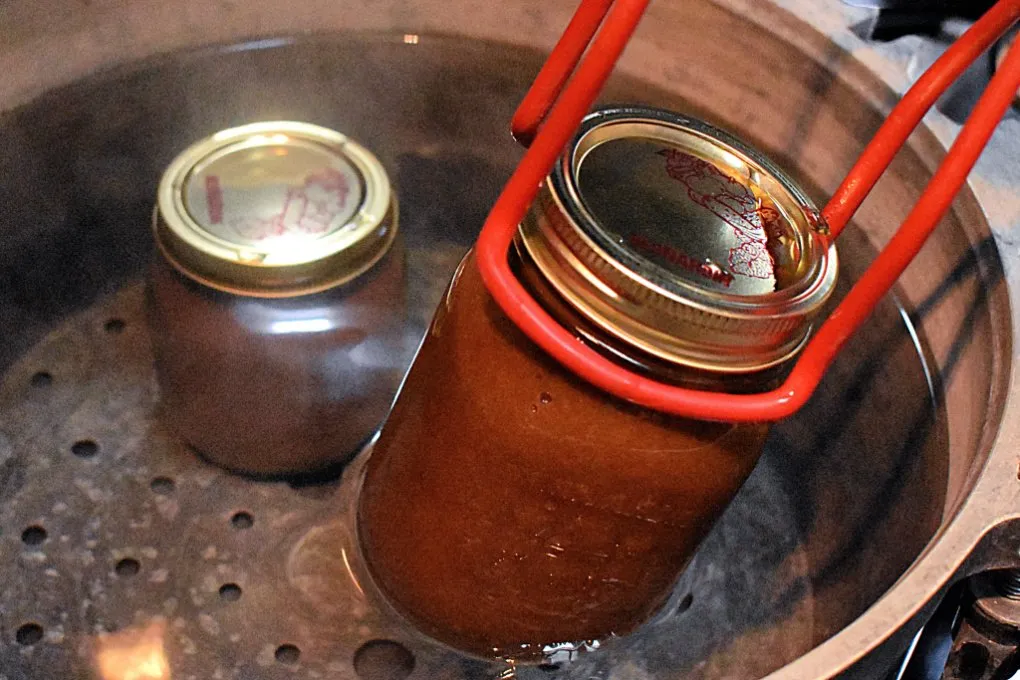
Position the jars on your canning rack so they aren’t touching one another, then lower the rack into the simmering water. If you don’t have a rack, simply place the jars onto a folded dish towel laid flat at the base of the pot.
The water line should lie about an inch (three centimeters) above the surface of the lids. Top up with more water if necessary. Turn up the heat to bring the pot to a rolling boil, then continue boiling for the time stated in your recipe (in my case, 10 minutes).
Step 5: Cool and Verify the Seal
When the processing time is up, turn off the heat. After waiting another 5 minutes, carefully remove the jars from the water using your tongs and place them onto a dry dish towel.
Leave them completely alone for 24 hours to let them cool back down to room temperature. As they cool and the internal vacuum develops, you will likely hear the lids make a distinct “pop” or “ping” sound.
Once fully cooled, check that the lids have successfully sealed by removing each metal band and pressing down firmly on the center of the lid. There should be no give or popping back up. > What if a jar fails to seal? If a lid has any give or flexes when pressed, the seal failed. Do not store it on the shelf. Instead, pop that jar straight into the refrigerator and make sure to eat the contents within two weeks.
Storing Your Bounty
Store your successfully sealed jars somewhere cool, dry, and dark. Under these conditions, your homegrown produce should keep beautifully for at least a year.
Once you get the hang of it, canning is a fantastic way of locking in that wonderful taste of summer to enjoy year-round. It also makes the perfect gift to share with friends and loved ones!