
Food preservation methods are one of the best ways to extend the life of your harvest, reduce food waste, and enjoy fresh flavors long after the growing season ends. From lacto-fermented cucumbers and tomatoes to dried fruits, homemade kimchi, and herb preservation, these techniques help transform fresh produce into delicious foods that can last for months.
Fermented Dill Pickles: A Taste Revelation
First up: cucumbers.
We all love dill pickles, don’t we? But these are fermented dill pickles.
Wow. That’s phenomenal.
I was honestly a bit squeamish about trying them at first, but the taste was absolutely mind-blowing.
This isn’t a new concept. In many Eastern European countries, fermenting cucumbers is a social family activity that has been enjoyed for generations.
I am absolutely blown away by the abundance of these cucumbers. I’ve already been picking loads and eating them day to day, but I’ve got four juicy cucumbers ready for my dill pickles.
Look at the size of this chunky monkey. Absolute girth on it!
I’m not even going to cut my giant pickles. I’ve got a huge vessel that will fit them whole. I’ll save a couple and slice them so you can do the same at home, but first I’ll prep them by scraping off any prickly bits and trimming the ends.
How Lacto-Fermentation Works
Lacto-fermentation is a natural process where beneficial bacteria, called lactobacilli, live on the skin of fruits and vegetables. These bacteria convert the sugars inside the cucumbers into lactic acid.
The acid produced during fermentation gives cucumbers their tangy, vinegary taste.
This method also creates probiotic-rich pickles that can support gut health while enhancing natural flavors.
Fermented Dill Pickle Method
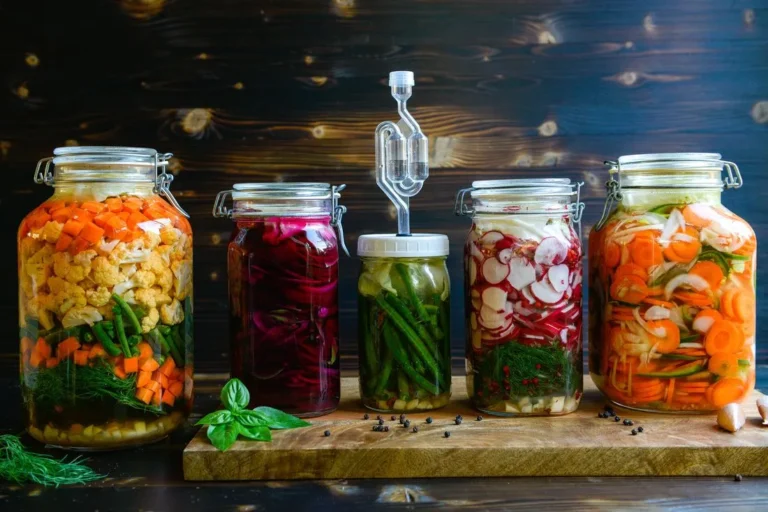
Simply place your cucumbers into a jar with your flavorings.
I’m adding:
- Dill flowers
- Garlic
- Pickling spices
Then pour over a spring water brine.
To make the brine, add salt equal to 4% of the water’s weight and whisk until dissolved.
Pour the brine over the cucumbers, ensuring everything is fully submerged. This is crucial because anything floating above the brine can develop mold.
You can use a clean pebble or another weight to keep everything submerged. My fermentation jar conveniently comes with weights.
Leave the jar on a shelf to ferment for one to two weeks, or until it reaches your preferred level of sourness. After that, store the pickles in the fridge for several weeks.
The texture is really surprising. The cucumber is no longer crisp in the center—it becomes soft, succulent, and juicy.
The lovely tang of fermentation is simply amazing.
Blackberry Barbecue Sauce
There’s nothing better than juicy blackberries when they come into season in late summer.
My mum and I always pick blackberries together. It’s one of those lovely traditions we’ve had for years.
Usually, I freeze them to make them last for months. I also turn them into jams, crumbles, and other sweet treats. This time, though, I wanted something savory.
Blackberries already have a wonderful tangy quality, so I thought:
Why not make a blackberry barbecue sauce?
It turned out spectacular.
Blackberry Barbecue Sauce Method
Start by roughly chopping:
- Onion
- Garlic
- Chili
Cook them slowly in a saucepan until they release their natural sweetness.
Next, add:
- Mustard seeds
- Fennel seeds
- Cumin seeds
- Ground coriander
- Smoked paprika
Allow the spices to toast gently and release their aromas.
Season with celery salt, then add:
- Tomato paste
- Miso paste
For herbs, I used fresh sage and thyme from the garden.
Then add the blackberries.
To help preserve the sauce, add sugar and white wine vinegar. The acidity is essential in any good barbecue sauce.
Finally, add:
- Bay leaves
- Star anise
Put the lid on and let everything bubble away for about 20 minutes.
I ended up with two jars. One for Mum and One for me.
You can spread it on grilled mushrooms, bake mushrooms with it, or simply use it as a dip for chips.
Lacto-Fermented Tomatoes
I genuinely feel like I’ve been eating tomatoes wrong my whole life.
After discovering lacto-fermented tomatoes, everything changed.
Similar to the fermented cucumber recipe—but even simpler—these tomatoes require just two ingredients.
The result?
Sweet tomatoes transform into incredibly tangy, vibrant, savory, umami-rich flavor bombs.
Serving Ideas
Today, I’m simply serving them on hummus with toasted bread because I want the fermented tomatoes to shine.
But you could also:
- Turn them into salsa
- Stir them through pasta
- Add them to gnocchi
- Put them in sandwiches
- Eat them straight from the jar
Even the liquid is amazing. It’s incredibly tangy and works brilliantly in dressings. The tomatoes can last for months in the fridge.
Just make sure everything remains below the brine at all times. Honestly, it’s like tomatoes on steroids, the flavor becomes unbelievably intense and tangy.
I’m going to have to make a lot more of these because I want this tomato flavor all year round.
Drying Tomatoes for Intense Flavor
Another fantastic way to preserve tomatoes is drying them.
Dried tomatoes add a completely different texture and taste. To me, they almost taste like dried mango.
How to Dry Tomatoes
- Gather ripe tomatoes.
- Slice them about 3 mm thick.
- Place them in a low-temperature oven (50–60°C) or a dehydrator.
In my dehydrator, they usually take around 12 hours. As soon as they’re dry enough to snap like a crisp, they’re ready. Store them in a sterilized jar for up to six months, or possibly longer.
Homemade Prunes
Drying is an incredible way of preserving food while intensifying flavor.
My neighbor has some amazing fruit trees, and recently I picked some plums from her garden.
Then it clicked: Prunes are simply dried plums.
So I loaded the plums into my dehydrator and let them dry. It actually took a couple of days for them to dry completely.
The result was homemade prunes—and they tasted delicious.
Making them reminded me how proud I am to be becoming more self-sufficient.
Years ago, I would have simply bought prunes from the supermarket. Now I realize how easy they are to make at home.
Air-Drying Herbs
Drying doesn’t always require an oven or dehydrator. I love hanging herbs upside down around the house.
They look beautiful, and they naturally dry over time. This is exactly how I’m drying my basil at the moment.
Preserving Greens
I grow a lot of greens because they’re incredibly prolific.
A few kale or chard plants can quickly produce more food than you’d expect.
Even if you only have a windowsill, I encourage you to grow one kale plant or one chard plant. They’re remarkably productive.
One simple way to preserve greens is to steam and freeze them.
I freeze mine in blocks and store them in freezer bags. Throughout winter, I add them to stews and curries.
But there’s another option.
Garden Greens Kimchi
Inspired by Korean kimchi, one of my favorite preservation methods, I created a kimchi-style preserve using garden greens.
The fermentation process creates an environment where harmful bacteria cannot thrive, making kimchi both delicious and effective for preservation.
Ingredients
I harvested:
- Kale
- Cabbage
- Chard
- Carrots
- Carrot tops
- Onions
- Garlic
- Apple
- Ginger
- Korean chili flakes
Method
Finely shred everything and place it into a mixing bowl.
Weigh the mixture and calculate 2% of the total weight in sea salt.
For my batch:
- Total weight: 2.47 kg
- Salt needed: 50 g
Add the salt and massage everything thoroughly.
Add chili flakes to taste.
Keep squeezing and pressing until lots of liquid is released.
Cover the mixture with a cloth and let it sit for about 30 minutes so the flavors can mingle.
Transfer to sterilized jars, cover the surface with nori sheets, add weights, and seal.
Ferment for 5–7 days, depending on the temperature of your home.
Then refrigerate and enjoy.
Preserving Basil in Oil
My aromatic kitchen companion. Out of all herbs, basil reigns supreme in both my heart and my taste buds.
During the cold Welsh winter, I miss it terribly, so I preserve it while it’s at its peak.
Basil Preservation Method
Layer basil and salt alternately in a jar until full.
Then cover everything with extra virgin olive oil.
Leave it to infuse for three to four weeks outside the fridge before refrigerating.
Stored properly, it can last up to a year.
Then, during the depths of winter, I can enjoy the flavor of fresh basil and be transported back to warmer days in the greenhouse.
Curing Pumpkins for Long-Term Storage
I’ve saved the most exciting part until last.
Because my dream kitchen is finally about to be built after three years of planning, I need to harvest my pumpkins earlier than expected.
Fortunately, pumpkins store beautifully if they’re cured properly.
How to Cure Pumpkins
Place pumpkins somewhere warm, such as a greenhouse, for about a week.
During this time, they develop a thick protective skin.
Once cured, move them to a cool place with a fairly stable temperature.
Properly cured pumpkins can last six to eight months.
And look at this beauty.
I genuinely think it’s the biggest pumpkin I’ve ever grown.
I’m incredibly proud of it.
Final Thoughts
Thank you for spending this time with me.
Please share the article if you enjoyed it, and leave a comment if you try any of these preservation methods.
I simply want to inspire people to cook, grow food, and enjoy the beauty of gardening and cooking.
That’s what life is all about for me.
Your support means the world, and I look forward to sharing more growing, cooking, and preserving adventures with you soon.