
Vegetable fermentation is one of the oldest and most reliable methods of food preservation. For centuries, cultures around the world have used fermentation to extend the shelf life of fresh produce while creating complex flavors and supporting beneficial microbial activity.
Today, fermented vegetables are experiencing a resurgence among home cooks, gardeners, and health-conscious consumers. However, many beginners struggle with questions about salt ratios, fermentation times, equipment requirements, and food safety.
This comprehensive guide explains everything you need to know about vegetable fermentation, including how fermentation works, the ideal salt percentage to use, the equipment you’ll need, and practical techniques for achieving consistent results every time.
Understanding How Vegetable Fermentation Works
Vegetable fermentation relies on a process known as lactic acid fermentation. When vegetables are submerged beneath a saltwater brine, an oxygen-free environment is created. In this anaerobic environment, naturally occurring beneficial bacteria—primarily Lactobacillus species—begin converting vegetable sugars into lactic acid.
As lactic acid accumulates, it lowers the pH of the brine, creating conditions that inhibit spoilage organisms while developing the characteristic tangy flavor associated with fermented foods.
The result is a preserved vegetable product with enhanced flavor, improved shelf life, and a thriving population of beneficial microorganisms.
Essential Equipment for Vegetable Fermentation
One of the greatest advantages of vegetable fermentation is its simplicity. Unlike many culinary techniques, fermentation requires very little specialized equipment.
Glass Jars
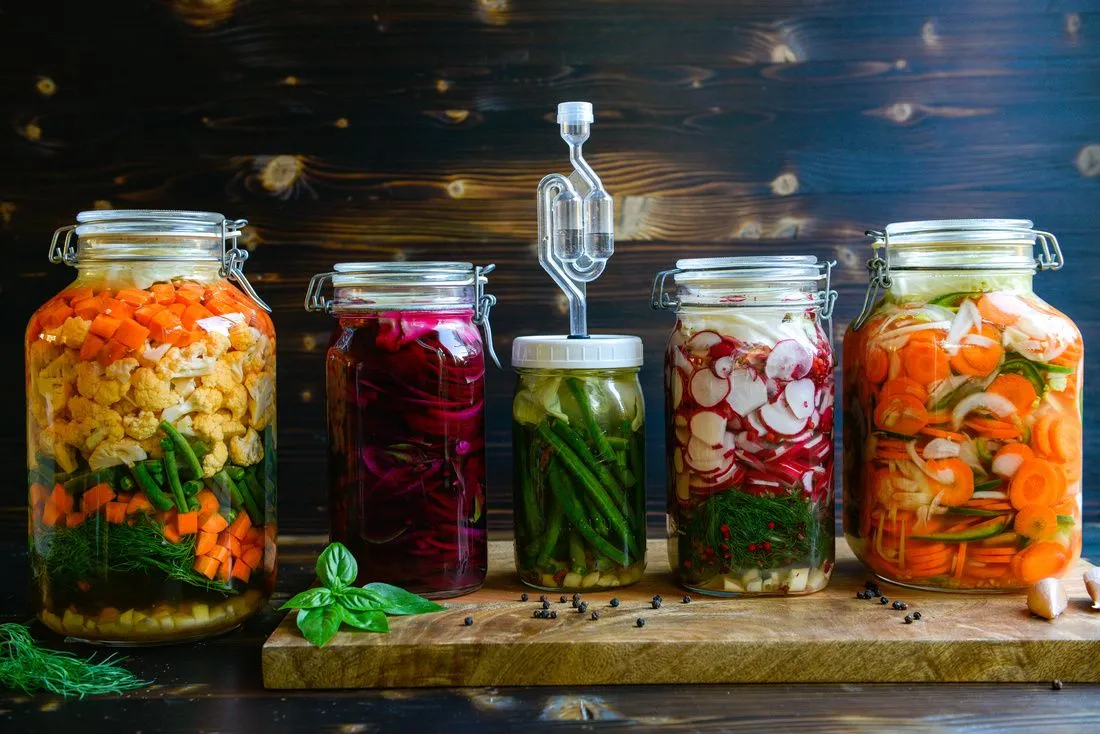
Glass jars remain the most practical fermentation vessels for home use. They are reusable, affordable, and transparent, making it easy to monitor fermentation activity.
Wide-mouth jars are generally preferred because they simplify packing vegetables and cleaning the container after use.
Fermentation Weights
Keeping vegetables submerged beneath the brine is one of the most important aspects of successful fermentation. Glass fermentation weights help prevent floating vegetables from rising above the liquid surface, reducing the risk of mold growth.
Fermentation Lids
Several lid options are available for home fermenters:
- One-way airlock lids
- Water-sealed airlocks
- Standard mason jar lids
Airlock systems are particularly useful because they allow carbon dioxide to escape while preventing oxygen from entering the jar.
Kitchen Scale
A digital kitchen scale is essential for measuring ingredients accurately. Successful fermentation depends on proper salt concentration, making precise measurements far more reliable than estimating by volume.
The Ideal Salt Ratio for Fermenting Vegetables
Salt percentage is arguably the most important variable in vegetable fermentation.
After extensive experimentation, a salt concentration between 2% and 5% of the total weight of vegetables and water consistently produces reliable results.
While there is no universal percentage suitable for every situation, understanding how salt influences fermentation makes selecting the appropriate ratio much easier.
1. Salt Affects Fermentation Speed
Lower salt concentrations generally encourage faster fermentation. Higher salt concentrations slow microbial activity, making them better suited for longer-term ferments.
2. Salt Influences Texture
Vegetable texture changes throughout fermentation. Softer vegetables often benefit from lower salt concentrations to preserve crispness, while denser vegetables such as carrots and beets can withstand higher percentages without becoming overly soft.
3. Salt Impacts Flavor Development
Beneficial lactic acid bacteria typically thrive in lower salinity environments. As a result, lower salt concentrations can encourage more pronounced fermented flavors.
Higher percentages produce a saltier final product but may offer greater stability during longer fermentation periods.
4. Salt Improves Fermentation Safety
Because salt suppresses undesirable microorganisms, higher concentrations generally reduce the likelihood of spoilage. For beginners, starting toward the upper end of the recommended range often provides greater consistency and confidence.
How to Calculate Salt for Vegetable Fermentation
The simplest method is to weigh the vegetables and water together.
The formula is:
Total Weight × Desired Salt Percentage = Salt Required
For example:
- Total vegetable and water weight: 1,000 grams
- Desired salt ratio: 3.5%
Calculation:
1,000 × 0.035 = 35 grams of salt
This approach ensures accuracy regardless of the vegetable being fermented.
Best Temperature for Vegetable Fermentation
Temperature significantly influences fermentation speed and flavor development.
A range of 60°F to 75°F (15°C to 24°C) is generally considered ideal for lactic acid vegetable fermentation.
Cooler temperatures slow the process and often produce more nuanced flavors. Warmer temperatures accelerate fermentation but require closer monitoring to prevent over-fermentation.
For most households, standard room temperature falls within the optimal range.
Practical Fermentation Examples
Different vegetables respond differently to fermentation, which often influences salt selection and fermentation duration.
Carrots and Beets
Carrots and beets are excellent beginner-friendly vegetables due to their dense texture. A salt ratio around 3.5% produces a balanced ferment with excellent flavor and texture.
Garlic Scapes
Garlic scapes develop a mild, garlicky flavor when fermented and work particularly well around a 4% salt concentration.
Hakurei Turnips
These sweet, tender turnips ferment exceptionally well whole and maintain their juicy texture during longer fermentation periods.
Radish Pods
Often overlooked, radish pods produce a surprisingly flavorful ferment with a crisp texture and distinctive flavor profile.
Sauerkraut
Unlike whole-vegetable ferments, sauerkraut relies primarily on the moisture naturally present in cabbage. Most successful sauerkraut recipes use a salt concentration between 2% and 3%.
How Long Should Vegetables Ferment?
Fermentation time varies depending on temperature, salt concentration, and personal taste preferences.
During the first few days, vegetables may taste underdeveloped because sufficient lactic acid has not yet formed.
By approximately day five, noticeable sourness begins to develop. Over the following weeks, flavors continue to deepen and become more complex.
Many fermenters discover that longer fermentation periods produce dramatically improved flavor. In some cases, vegetables fermented for several months develop characteristics that are entirely different from their fresh counterparts.
Final Thoughts
Vegetable fermentation combines simplicity, tradition, and flavor in a way few food preservation methods can match. With only vegetables, water, salt, and a basic fermentation vessel, anyone can begin producing high-quality fermented foods at home.
By understanding proper salt ratios, maintaining anaerobic conditions, and allowing sufficient fermentation time, beginners can consistently create flavorful ferments while developing the confidence to explore more advanced fermentation projects in the future.